
Converting your overseas licence to a Victorian licence
Already an experienced driver? We help you adjust to Victorian road rules, hook turns and local test routes quickly — patient, one-on-one automatic lessons across 60 Melbourne suburbs.
You already know how to drive — let's adjust it to Victorian roads
If you've been driving overseas, converting to a Victorian licence isn't about learning to drive from scratch — it's about adjusting habits that are second nature in another country to the way Victoria does things. Which side of the road, roundabout give-way rules, hook turns in inner areas, speed zone signage, and the specific manoeuvres VicRoads examiners look for on test day can all differ from what you're used to.
Pathfinder's lessons for overseas licence holders are focused and efficient. Rather than a generic beginner curriculum, Sam assesses your existing skills in the first lesson and builds a short, targeted plan to get you comfortable with Victorian rules and the local test route as quickly as possible.
What we help with
- Roundabout and give-way rules — Victoria's give-way and merging rules trip up many overseas-trained drivers.
- Hook turns — required at certain intersections and unfamiliar to most drivers coming from overseas.
- Speed zones and school zones — Victorian signage and enforcement conventions.
- Local test routes — the exact roads and manoeuvres examiners use at your nearest VicRoads centre.
- Confidence on unfamiliar roads — multi-lane arterials, freeway merges and Melbourne's traffic patterns.
Because you're already an experienced driver, most overseas licence conversions take fewer lessons than a first-time learner needs — see our lesson pricing for single lessons and short packs that suit a focused conversion plan.
Converting an overseas licence: how it works
If you have moved to Victoria and hold an overseas licence, at some point you will usually need a Victorian licence. Exactly what that involves depends on your visa status, how long you have been in Victoria, and which country issued your overseas licence.
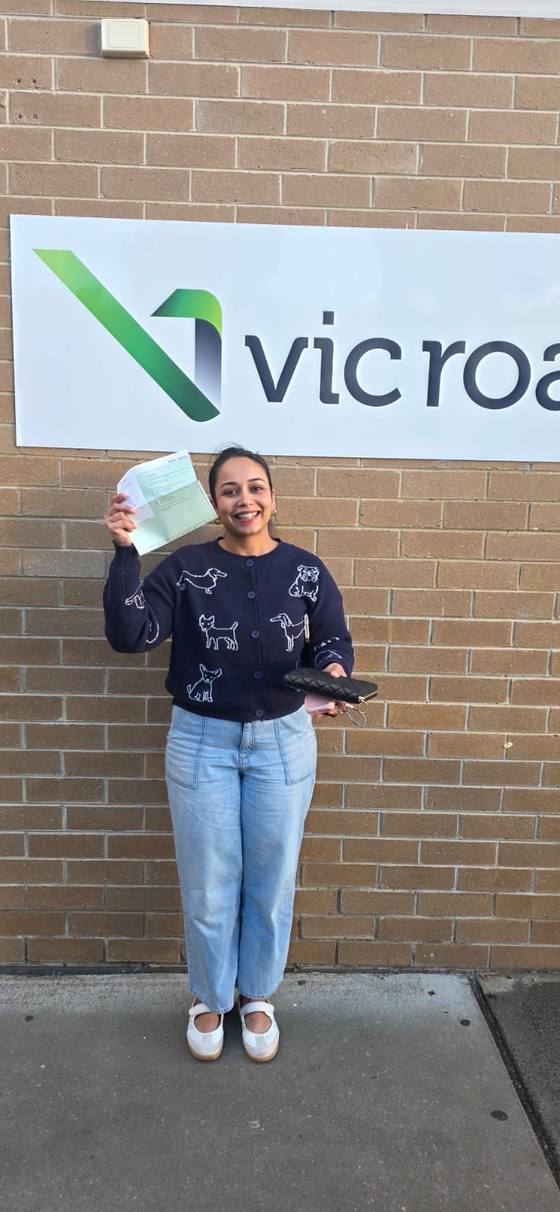
For some countries, VicRoads can convert an overseas licence without a drive test. For others, you will need to pass tests first, typically a knowledge test, the Hazard Perception Test and the drive test. The VicRoads guide to converting an overseas licence explains the current rules for your situation, so always start there.
This guide explains the practical side: what usually changes for overseas drivers on Victorian roads, and how focused lessons can get you test-ready quickly.
Step by step: from overseas licence to Victorian licence
- Check the VicRoads rules for your country and visa, including how long you can keep driving on your overseas licence.
- Gather your documents, including your overseas licence and identity documents. Licences not in English usually need an approved translation.
- Complete any tests VicRoads requires, such as the knowledge test or Hazard Perception Test.
- Take some focused lessons to adjust your driving to Victorian rules and test standards.
- Sit the drive test if your conversion needs one.
- Receive your Victorian licence and enjoy driving with confidence.
What feels different for overseas drivers
Experienced overseas licence holders already know how to drive. The challenge is usually unlearning habits that are normal at home but cost marks here. The things we spend most time on:
- Keeping left, especially when turning and leaving roundabouts, if you are used to driving on the right.
- Give-way rules at intersections, T-intersections and roundabouts.
- Turning right at traffic lights, giving way to oncoming traffic unless an arrow says otherwise.
- Trams, including when you must stop for passengers getting on and off.
- School zones and speed limits, which can change often within short distances.
- Observation habits: mirror and blind-spot checks that examiners expect to see clearly.
Why the drive test catches out experienced drivers
Many drivers with an overseas licence are surprised to find the drive test challenging, even after years behind the wheel. The test checks safe habits against Victorian standards, and small things add up: a missed head check, rolling through a give-way, or drifting over the speed limit.
The good news is that experienced drivers usually need far fewer lessons than beginners. Most of the work is fine-tuning, not starting from scratch.
How our lessons help overseas licence holders
Our lessons for overseas licence holders are focused and practical. We start with a drive where you show us how you normally drive, then give you honest feedback on what to adjust for Victorian roads and the test.
From there, each lesson targets the habits that matter most: observation, give-way decisions, lane positioning, speed and the reversing manoeuvres you may be asked to do. Every lesson is one-on-one in an automatic dual-control car.
When you are ready, our test-day packages include a warm-up lesson plus use of our car for the test, so you do not need to organise an eligible vehicle yourself. See our lesson prices and packages.
How many lessons will you need?
It depends on your experience and how different driving is in your home country. Many overseas licence holders only need a handful of focused lessons. Some, especially those used to driving on the right, benefit from a few more to settle into keeping left and the local give-way rules.
After your first lesson we will give you an honest recommendation, so you only book what you actually need.
Tips for converting your overseas licence smoothly
- Start early. Check the VicRoads rules soon after you arrive, so you are not caught out by time limits.
- Study the road rules. The official handbook explains Victorian rules that differ from home.
- Practise the Hazard Perception Test if you need to sit it. Our Hazard Perception Test guide explains how it works.
- Drive the test car beforehand, so it feels familiar on the day.
- Book a warm-up lesson on test day to settle nerves.
Overseas licence holders we help
Our lessons suit drivers converting an overseas licence from any country, whether you have come to Melbourne to study, to work or to join family. Lessons are available across 60 suburbs in Melbourne's east and south-east, including Box Hill, Clayton, Glen Waverley, Doncaster and Dandenong.
Lessons run 7 days a week, so they are easy to fit around work and study. Our blog post on overseas licence conversion in Victoria covers more of the background.
Victorian road rules that surprise newcomers
Some Victorian rules are unusual even for very experienced drivers. These are the ones we explain most often:
- Hook turns: at some intersections in Melbourne's city centre, you turn right from the left lane to keep tram tracks clear. Signs show where this applies.
- Trams: when a tram stops and there is no safety zone, you must stop behind it while passengers get on and off.
- School zones: lower speed limits apply at set times near schools, and they are strictly enforced.
- Buses pulling out: in many lower-speed areas you must give way to a bus that is signalling to leave a stop.
- Mobile phones: strict rules apply to phone use while driving, and they are stricter still for learner and probationary drivers.
The official road rules handbook covers all of these. In lessons, we practise them on real roads so they become second nature.
Practical habits for driving on the left
If you are used to driving on the right, a few habits help enormously. Keep reminding yourself that the driver sits towards the centre of the road. After turning, especially from a quiet street, check that you have ended up in the left lane.
Roundabouts go clockwise here, and you give way to vehicles already in them. Your mirrors and blind spots are on the opposite side to what you are used to, so head checks need extra attention at first.
Most drivers find these habits settle within a few lessons, especially with an instructor beside them to catch slips early.
Getting used to Melbourne traffic
Melbourne roads mix busy arterial roads, trams, cyclists and quiet residential streets, often within a few minutes of each other. Speed limits can change frequently, so reading signs early is important.
We usually start lessons in your local area, then build up to busier roads, multi-lane intersections and freeways. That way you get comfortable step by step instead of all at once.
What examiners look for
Examiners want to see safe, consistent driving to Victorian standards. In practice that means clear observation, correct give-way decisions, steady speed control, good lane positioning and smooth, confident manoeuvres.
Experienced drivers sometimes lose marks for habits that feel natural, such as a quick glance instead of a proper head check. Our lessons focus on making those checks clear and consistent.
A car for the test
If your conversion needs a drive test, you will need an eligible car: clean, registered, roadworthy and suitable for the test. Many overseas drivers do not have a car like that yet, which is why our test-day packages include use of our dual-control car, plus a warm-up lesson beforehand.
Preparing your documents
Getting your paperwork right saves time. Check which identity documents VicRoads needs, whether your licence needs an approved translation, and whether any medical information is required. Bring originals rather than copies when you visit a VicRoads Customer Service Centre.
Mistakes we often see from experienced drivers
Experienced drivers bring real skills, but a few habits come up again and again in lessons:
- Rolling stops at stop signs instead of coming to a complete stop.
- Quick mirror glances without a clear head check for the blind spot.
- Turning into the wrong lane after a turn, especially from quiet streets.
- Following too closely in busy traffic.
- Missing speed limit changes, particularly around schools and shopping strips.
These are usually quick to fix once you know to look for them.
How long does conversion take?
Timing depends on your country, which tests you need, appointment availability and how quickly you feel ready. Some drivers convert within weeks; others take longer if they need several tests.
Check the VicRoads requirements early, book any tests you need, and fit a few focused lessons in between. Planning ahead avoids last-minute stress, particularly if you are relying on your current licence for a limited time.
Learning near your test centre
If your conversion needs a drive test, it helps to practise on the kinds of roads you are likely to meet around your test centre. In your final lessons we focus on those roads and manoeuvres, so the test itself feels familiar.
We prepare drivers for test centres used by the suburbs we cover, including Ringwood, Dandenong, Heatherton and Pakenham.
After you convert
Once you have your Victorian licence, it is worth staying alert to rules that still feel new, especially around trams, school zones and roundabouts. Some drivers book a refresher lesson a few months later to build confidence with freeways or unfamiliar parts of Melbourne.
Things to check with VicRoads
Because the rules depend on your circumstances, it is worth checking a few things directly with VicRoads before you start:
- How long you can keep driving on your current licence.
- Whether your country's licence can be converted without a drive test.
- Which tests you need to sit, and how to book them.
- Whether your licence needs an approved English translation.
- Which identity documents to bring to a Customer Service Centre.
Once you know what applies to you, we can plan lessons around it.
If anything in the VicRoads information is unclear, bring your questions to your first lesson. We cannot speak for VicRoads, but we can explain how the drive test works in practice, what examiners tend to look for, and how to plan your lessons around your test dates so you feel prepared rather than rushed.
Practising with family or friends
If you have someone who can supervise practice drives, use them to reinforce what you learn in lessons. Focus on one habit at a time: clear head checks, full stops at stop signs, or keeping left after turns.
Be aware that family members may have their own habits too. If something they suggest differs from what you learned in a lesson, ask us about it next time.
Your first months driving in Melbourne
Even after you convert, Melbourne can take a little getting used to. Plan routes before you leave, give yourself extra time, and avoid the busiest times for your first few long drives.
Pay extra attention around trams, cyclists and school zones, and watch for speed limits that change over short distances. Within a few months, most drivers feel completely at home on Melbourne roads.
Choosing lesson lengths for conversion
For experienced drivers, 60-minute lessons are usually enough to work on specific habits, such as head checks, give-way decisions or keeping left. Each lesson can focus on one or two areas, with clear feedback at the end.
A 90-minute lesson can be useful closer to a drive test, because it allows time for a longer drive that feels like the real thing, followed by detailed feedback. Many drivers mix the two, starting with shorter lessons and finishing with a longer test-style session.
Why automatic lessons suit most converting drivers
We teach automatic only, which suits most drivers converting a licence. Without a clutch to manage in an unfamiliar car, you can concentrate fully on Victorian road rules, observation and the standards the test expects.
If you have driven manual overseas, you will find an automatic quick to adjust to. Most drivers are comfortable within the first lesson, leaving the rest of the time for what really matters.
Ready to convert your overseas licence?
Converting an overseas licence is very achievable with the right preparation. Check the VicRoads rules for your situation, then let us help you adjust your driving and walk into the test with confidence.
Book a lesson online, or call or text us to talk through where you are up to.
Check your eligibility first
Whether you can drive on your overseas licence, and what's required to convert it, depends on your visa status, time in Victoria and country of origin. Always check the current requirements on the official VicRoads website before booking lessons, so we can tailor your plan to exactly what you need.
60 suburbs across Melbourne
Ready to convert your licence?
Book a focused lesson plan built around your existing driving experience.
Frequently asked questions
It depends on your visa status and how long you've been in Victoria — check the current VicRoads overseas licence rules for your situation, as they vary by country and visa type.
Not always required, but most overseas licence holders benefit from a few focused lessons to adjust to Victorian road rules, hook turns, roundabout give-way rules and local test routes before sitting a Victorian assessment.
We teach automatic only, which lets you focus on adjusting to Victorian rules and routes rather than clutch control.
Most experienced overseas drivers need far fewer lessons than a first-time learner — often just enough to adjust to local rules and test routes. Your instructor gives an honest estimate after your first lesson.