
Driving test tips to pass your VicRoads test in Melbourne
Practical, honest advice from Pathfinder's instructor on preparing for your Melbourne drive test — plus how our test day packages can help.
Getting genuinely test-ready
Most learners fail not because they can't drive, but because nerves get in the way of skills they already have. The best preparation combines structured lesson time with honest feedback about when you're actually ready — not just when you feel ready.
1. Log your hours properly
Victorian learners typically need 120 hours of supervised driving logged before their test, including night driving hours. Spread this practice out over weeks or months rather than cramming — consistent, varied practice builds skills that hold up under test-day pressure. For the current requirements, see the official VicRoads guide to preparing for your licence test.
2. Rehearse your local test route
Every VicRoads test centre uses a set of common local roads and manoeuvres. Your instructor should train you specifically on the roads near your test centre — the intersections, roundabouts and parking spots examiners actually use — rather than generic driving practice.
3. Get comfortable with the manoeuvres
Parallel parking, reverse parking and three-point turns catch out a lot of otherwise confident drivers, simply because they're rehearsed less often than everyday driving. Practise these specifically and repeatedly in the weeks before your test.
4. Drive the car you'll test in, beforehand
Whether it's your own car or the instructor's, get comfortable with its size, mirrors, and blind spots before test day. Unfamiliar pedals or mirror positions add unnecessary stress on the day.
5. Treat test day like any other lesson
Examiners are assessing overall safe driving, not looking for a single mistake to fail you on. Stay calm, keep to the habits you've practised, and drive the way you have in your lessons — steady, observant and unhurried.
More driving test tips from our lessons
The five tips above cover the basics. These seven come from the mistakes we see most often in lessons, and fixing them makes a real difference on the day of your driving test.
6. Make your observation obvious
Examiners can only mark what they see. Move your head clearly for mirror and blind-spot checks before moving off, changing lanes, merging and turning. A quick glance with your eyes alone can be missed. This is one of the most common reasons learners lose marks on the driving test.
7. Commit at intersections
Hesitating when it is safe to go can cost as many marks as going when it is not. Approach intersections at a sensible speed, look early, and when there is a safe gap, go smoothly. Practise this at give-way intersections and roundabouts until it feels natural.
8. Keep your speed steady
Drifting over the speed limit is an obvious fault, but driving well under it without a reason is marked too. Watch the signs, especially where limits change, around school zones and shopping strips, and keep a steady, appropriate speed.
9. Get your lane position right
Stay centred in your lane, choose the correct lane early when approaching turns, and do not cut corners when turning. On multi-lane roads, avoid drifting between lanes. Good positioning tells the examiner you are in control.
10. Signal at the right time
Signal early enough for others to react, but not so early that it confuses them. Remember the exit signal at roundabouts, and cancel your indicator after turning. Our roundabouts guide covers the signalling rules in detail.
11. Practise your reversing manoeuvres
You may be asked to complete a reversing manoeuvre such as a parallel park or three-point turn. Go slowly, use your mirrors, turn your head to check behind, and keep checking all around the car. Speed is never the goal when reversing.
12. Manage your nerves
Some nerves are normal on driving test day. A warm-up lesson beforehand helps you settle and sharpens your observation and speed control. If you make a small mistake during the test, stay calm and keep driving safely; one small error does not automatically mean you have failed.
What happens on the driving test
The VicRoads drive test starts with a short pre-drive check of the car, including things like the indicators, lights and horn. It then has two on-road stages. You continue to the second stage only once you have driven safely and competently in the first.
The whole driving test usually takes around 30 to 45 minutes depending on traffic. Examiners look for safe, consistent habits rather than perfection: observation, speed control, lane position, signalling and safe decisions at intersections.
Before you can book your driving test
- You must be at least 18.
- You must have held your learner permit for the minimum time.
- If you are under 21, you must have logged 120 hours of supervised driving, including 20 at night.
- You must have passed the Hazard Perception Test.
The VicRoads guide to getting your Ps has the full, current requirements.
What to bring on driving test day
- Your learner permit.
- Your logbook or myLearners record, if you are under 21.
- Glasses or contact lenses, if your permit requires them.
- An eligible car, or simply use our dual-control car with a test-day package.
Test centres we prepare you for
We prepare learners for the driving test at the VicRoads test centres used by the suburbs we cover, including Ringwood, Dandenong, Heatherton and Pakenham. In your final lessons we practise the kinds of roads and manoeuvres examiners use around your centre, so nothing on the day feels unfamiliar.
If you do not pass first time
It happens to plenty of people. The examiner will explain what went wrong. Focus your next lessons on those areas, then rebook when you are ready. Many learners pass comfortably on their next driving test.
The week before your driving test
The final week is about consistency, not cramming. Keep practising normally, and focus on any weak spots your instructor has pointed out. Book a lesson or two that feel like the driving test itself, so the real thing feels familiar.
Check your paperwork early: your learner permit, your logbook or myLearners record if you are under 21, and your driving test booking details. If you are using your own car, make sure it is clean, registered and roadworthy.
The night before and the morning of your driving test
Get a good night's sleep and eat something before you leave. Plan your trip to the test centre so you arrive early, without rushing. Rushing adds stress you do not need.
If you have booked a warm-up lesson, use it to drive calmly around the local area and settle into the car. Avoid trying anything new on driving test day; stick to what you have practised.
During the driving test
Listen carefully to each instruction, and if you are unsure, ask the examiner to repeat it. That is completely acceptable during a driving test. Take your time at intersections, keep your observation clear and drive at a steady, appropriate speed.
If you make a small mistake, do not dwell on it. Focus on the next part of the drive. Many learners pass their driving test despite small errors, because the examiner is looking at your overall safe driving.
Common reasons people fail the driving test
- Missed observation: not checking mirrors and blind spots clearly enough.
- Give-way errors: failing to give way at intersections or roundabouts.
- Speed: going over the limit, or driving well under it without reason.
- Hesitation: not going when it is safe, which can hold up traffic.
- Lane position: drifting, cutting corners or choosing the wrong lane.
Every one of these can be fixed with focused practice before your driving test.
Driving test myths
"Examiners try to fail you." They do not. Examiners assess whether you can drive safely on your own, and they want to see safe, consistent habits.
"One mistake means you have failed." Not necessarily. Small errors can be marked without ending the driving test; serious or dangerous errors are what usually lead to a fail.
"You need to drive perfectly." You need to drive safely and confidently. Calm, clear and consistent beats perfect.
After you pass your driving test
Passing your driving test moves you onto a probationary licence and P plates. Probationary drivers have their own conditions, and the details depend on your age, so check the VicRoads probationary rules before you drive solo.
Many new drivers book a refresher lesson in their first months on their Ps to build confidence with things like freeway driving at night or carrying passengers.
Reversing manoeuvres in detail
Reversing is where many learners feel least confident before the driving test. A parallel park, for example, is easier when broken into steps:
- Pull up alongside the car you will park behind, leaving a sensible gap.
- Check all around, signal, and reverse slowly until your rear wheels line up with that car's back bumper.
- Steer towards the kerb, checking your mirrors and over your shoulder.
- Straighten up as the car angles into the space, then gently correct your position.
- Finish parallel to the kerb, with space in front and behind.
Go slowly throughout and keep checking for pedestrians and other vehicles. We practise this until it feels routine.
Handling intersections and roundabouts on test day
Intersections are where most marks are won or lost in a driving test. Approach at a speed that lets you stop if needed, look early in every direction, and make a clear decision. At roundabouts, give way to vehicles already in them, signal correctly on the way in and out, and keep to your lane.
Using your mirrors properly
Check your mirrors before slowing down, stopping, turning, changing lanes or moving off. Combine mirror checks with head checks where needed, and make them obvious. On a driving test, the examiner needs to see that you know what is happening around you at all times.
A quick car checklist
If you are using your own car, check it the day before: indicators, brake lights, headlights, horn, tyres, windscreen and wipers. The pre-drive check at the start of the test covers some of these, and a fault can stop the test from going ahead.
When to book
Book when you are consistently driving safely in all conditions, not just when you become eligible. If you are unsure, ask your instructor for an honest view before you book your driving test.
Practising with your supervising driver
Practice between lessons is where good habits become automatic. In the weeks before your test, ask your supervising driver to watch for the things examiners notice: head checks, full stops, signalling and speed.
Drive a variety of roads at different times of day, including busier roads near your test centre. Keep practice drives short and focused, and finish each one with a quick chat about what went well and what to work on.
A simple routine to stay calm
Having a routine helps you stay calm under pressure. Before moving off each time, take a breath, check your mirrors, and think "observe, signal, go". At every intersection, look early and decide calmly.
Practise this routine in every lesson so it feels automatic. On the day, it gives your mind something familiar to focus on instead of nerves.
How many lessons before the driving test?
There is no fixed number, but most learners benefit from at least a few lessons focused purely on test preparation, even if they have done plenty of supervised driving. These lessons target the habits examiners notice and give you practice in conditions like the real driving test.
If your instructor feels you need more time, it is worth listening. Booking a little later and passing first time is far better than rushing and having to rebook. Our article on how many driving lessons you need has typical ranges.
Get driving test ready with Pathfinder
Our test-day packages include a warm-up lesson plus use of our car for the driving test. If you need more practice first, our lesson packs build up to the test step by step. See all prices and packages, or book online.
For more detail on test preparation, read our guide how to pass your driving test the first time.
Before you can book your test
- Log your hours — supervised driving hours recorded in your logbook or the myLearners app, if you're under 21.
- Pass the Hazard Perception Test — the online VicRoads test required before booking your practical test.
- Have an eligible car — clean, registered and roadworthy with a working handbrake, or use our dual-control car, included in the test-day package.
How Pathfinder helps you on the day
Every test day package includes a warm-up lesson plus use of the instructor's fully insured car for your VicRoads test.
Get test-ready with Pathfinder
Book a warm-up and test day package, or start with a standard lesson to build your skills first.
Frequently asked questions
Get an early night, check you have your learner permit, logbook and any required documents ready, and avoid cramming new skills — a calm, rested mind matters more than a last-minute lesson.
One mistake rarely fails a test on its own. Examiners are looking for overall safe, controlled driving — stay calm, correct the error safely, and keep driving to the standard you've practised.
Yes, as long as it's roadworthy, registered and meets VicRoads requirements — or you can use the instructor's car, included in our test day packages.
Your instructor will give you an honest assessment — consistently safe observation, smooth control and confident handling of intersections, roundabouts and parking are the key signs you're ready.
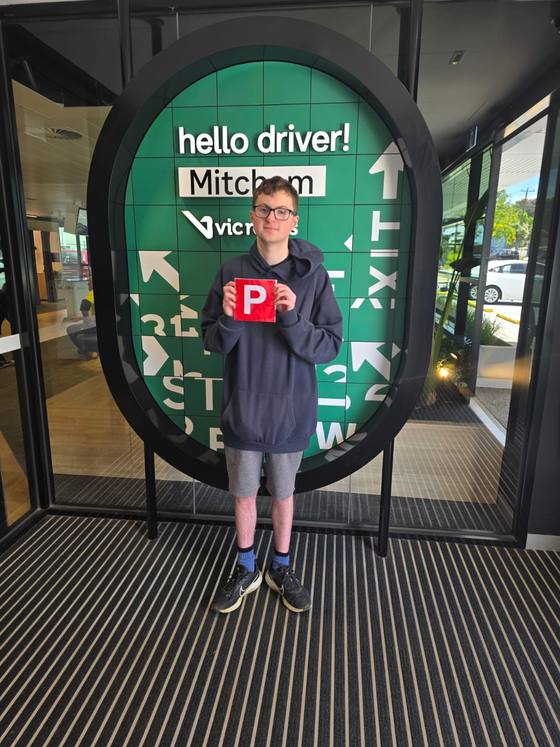
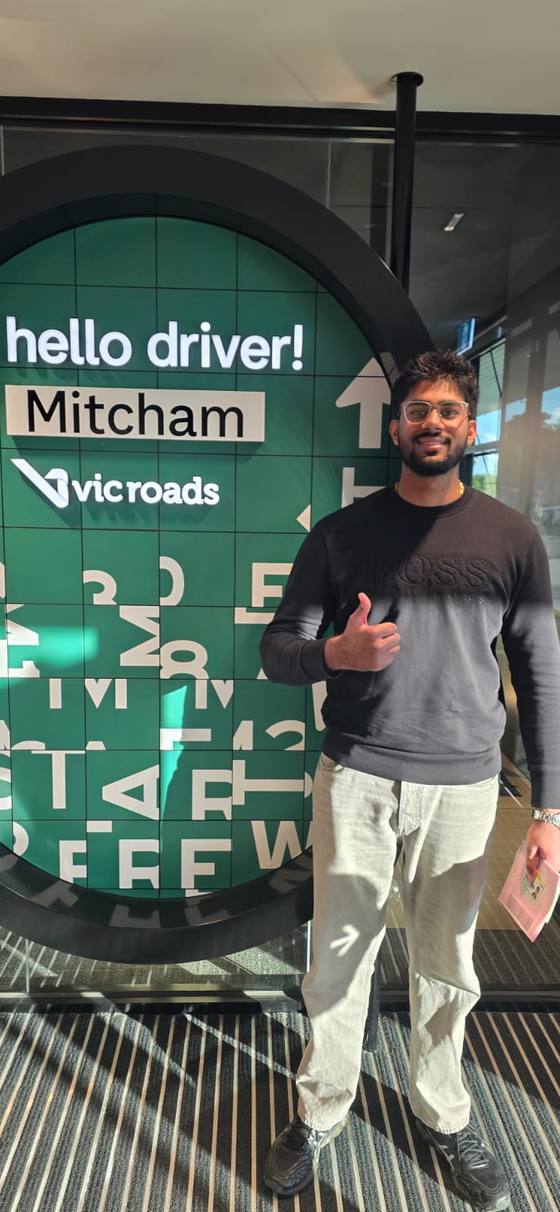
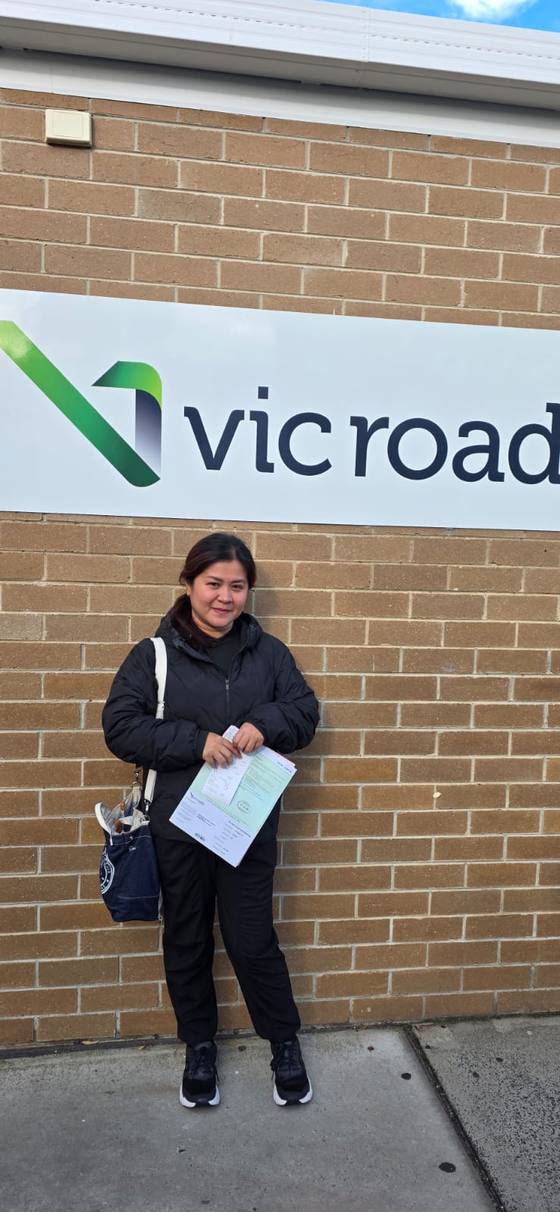
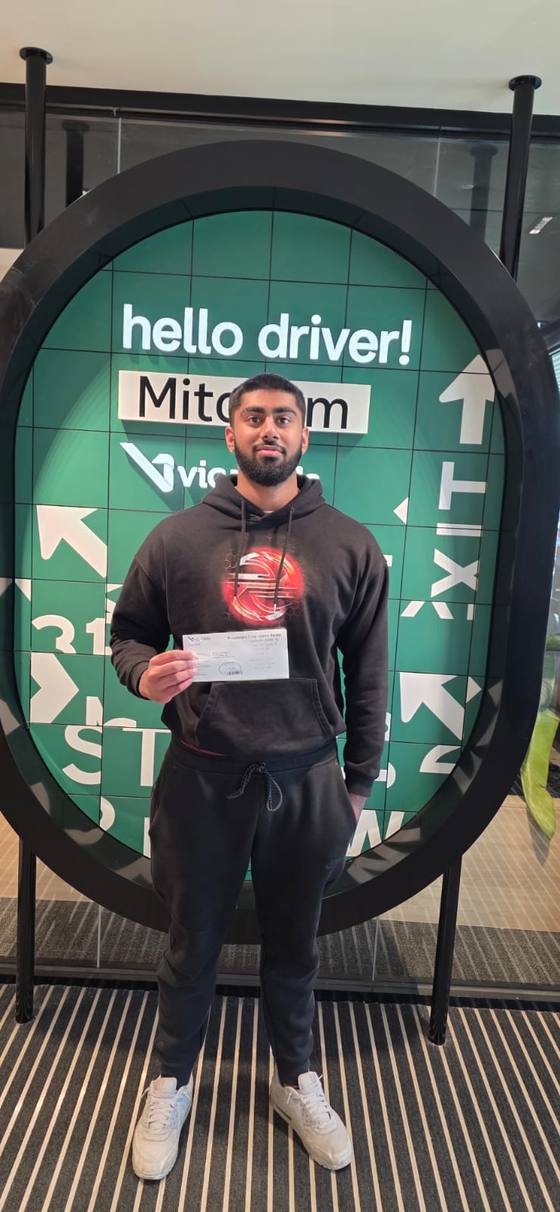
Students who passed their test
Pathfinder learners celebrating at the VicRoads Mitcham (Ringwood) centre.


Helpful resources for learner drivers
Straight from VicRoads and Transport Victoria: everything you need between your learner permit and your Ps.
Getting your Ls
Getting your Ps
Pathfinder Driving School is an independent driving school and is not affiliated with VicRoads or Transport Victoria.