
Getting your learner permit is the first big step towards driving on your own. It can feel like there is a lot to remember: tests, rules, logbook hours and more tests. Broken into steps, though, the journey from learner permit to P plates is very manageable.
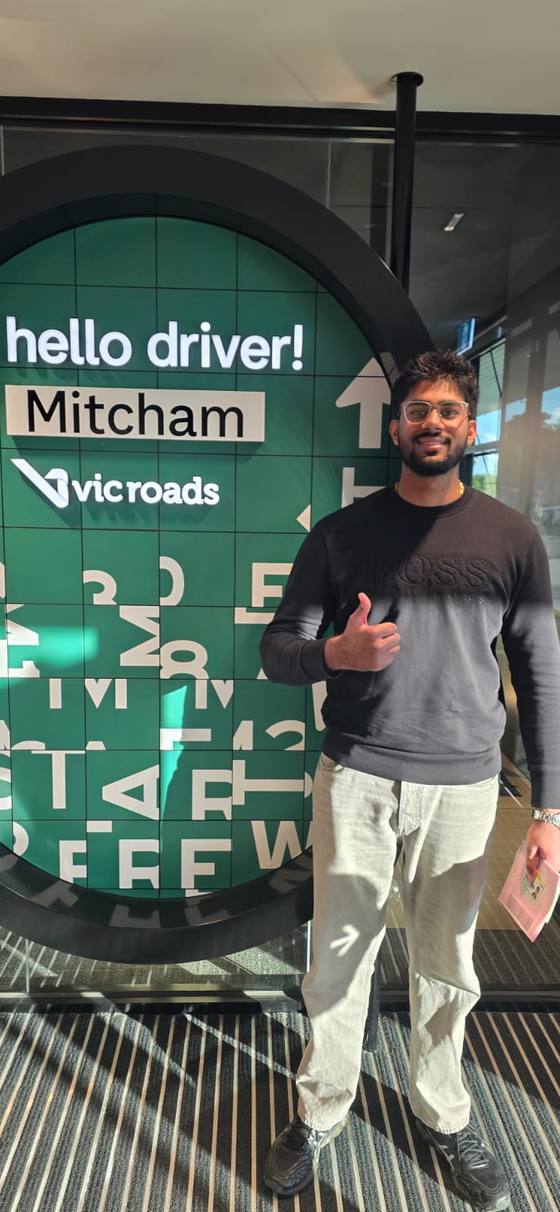
This guide walks through the 10 steps from applying in Victoria to passing your drive test. Along the way it covers the rules you must follow on your Ls, how supervised driving works, and how lessons fit in.
Rules and requirements can change, so always confirm the details with VicRoads licence information before you book anything. This guide is a friendly overview, not legal advice.
Step 1: Check you are eligible for a learner permit
In Victoria you can apply for a learner permit from age 16. You will need to prove your identity and pass a knowledge test and an eyesight test before your learner permit is issued.
If you are new to Victoria and already hold an overseas licence, your path may be different. Our guide to overseas licence conversion in Melbourne explains how that works.
Step 2: Prepare for the learner permit knowledge test
The learner permit knowledge test checks that you understand Victoria’s road rules. It is a multiple-choice test covering things like give-way rules, speed limits, signs, road markings and safe driving.
The best preparation is the official VicRoads road rules handbook and practice questions. Do a little each day rather than cramming. Pay extra attention to the rules learners find confusing, such as giving way at intersections and roundabouts.
Many learners find it helps to explain the rules out loud to a parent or friend. If you can teach a rule, you understand it.
Step 3: Sit the test and collect your learner permit
Once you pass the knowledge test and eyesight test, and your paperwork is in order, you will receive your learner permit. From that moment you can start driving, but only under the learner permit rules.
It is worth checking the details straight away and keeping the card with you whenever you drive.
Step 4: Learn the rules for learner permit holders
Driving on a learner permit comes with strict conditions. The most important are:
- Always have a supervising driver beside you who holds a full Victorian (or equivalent) licence.
- Display L plates clearly on the front and back of the car.
- Zero blood alcohol: you must not drive with any alcohol in your system.
- No mobile phone use at all while driving, including hands-free and maps.
- Carry your learner permit every time you drive.
Breaking these conditions can mean fines, demerit points and delays to getting your licence, so it is worth taking them seriously from day one.
Step 5: Find a good supervising driver
Most of your practice will be with a supervising driver, often a parent or family member. A good supervisor is calm, patient and willing to follow current road rules rather than old habits.
It helps to agree on simple, clear instructions before each drive, such as “turn left at the next street” instead of “go that way”. Short, regular drives tend to work better than occasional long ones.
Professional lessons work best alongside this practice. An instructor can teach the right techniques early, so family practice reinforces good habits rather than bad ones.
Step 6: Log your supervised driving hours
If you are under 21 when you go for your licence, you must complete 120 hours of supervised driving on your learner permit, including at least 20 hours at night. You record these hours in your logbook or the myLearners app.
Spread your hours across different conditions: day and night, wet and dry, quiet streets and busy roads, local trips and longer drives. Variety matters more than simply adding up minutes.
Lessons with an accredited instructor can usually be counted towards your learner permit hours, so check the current VicRoads rules on how to record them.
Step 7: Hold your learner permit for long enough
There is a minimum time you must hold your learner permit before you can go for your licence. If you are under 21, that is at least 12 months. Older learners have shorter minimum periods; check VicRoads for the period that applies to you.
Use this time well. The goal is not just to wait out the clock, but to build real experience so that when you are eligible for the test, you are genuinely ready.
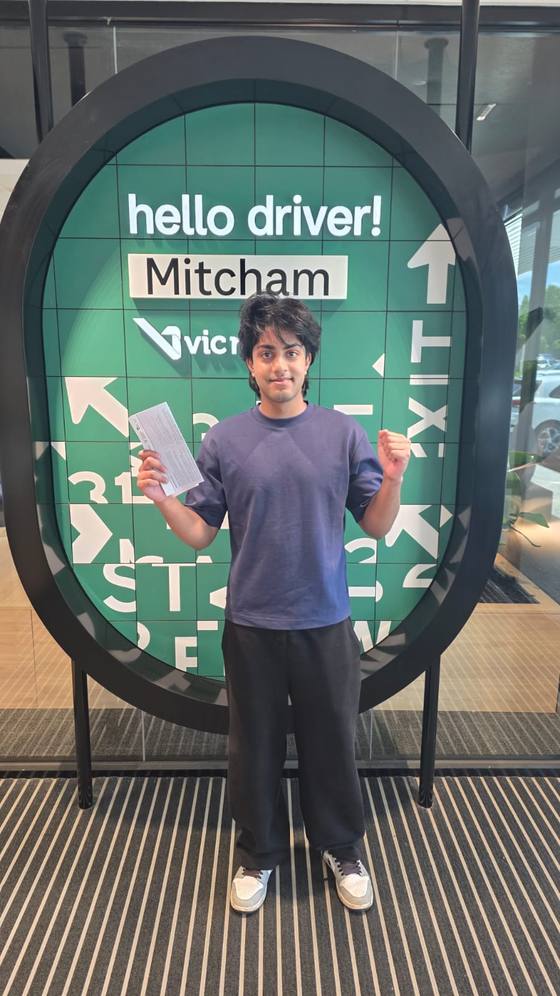
Step 8: Take professional driving lessons
Professional lessons are not compulsory, but they make a big difference to how quickly and safely you progress. An instructor can spot habits a family member might miss and teach you exactly what examiners look for.
At Pathfinder, every lesson is one-on-one in an automatic dual-control car. We start with the basics on quiet streets and build up through roundabouts, busy intersections, lane changes and freeway driving, at a pace that suits you.
Wondering how many you will need? Our guide how many driving lessons do I need gives honest ranges for different learners.
Step 9: Pass the Hazard Perception Test
Before you can book your drive test, you must pass the Hazard Perception Test. It is a computer-based test that checks how well you recognise and respond to hazards in traffic.
Real driving experience is the best preparation, because you learn to read the road naturally. Our guide to the VicRoads Hazard Perception Test explains how it works and how to prepare.
Step 10: Book and pass your drive test
The final step is the drive test. You must be at least 18, have held your learner permit for the minimum time, have your logged hours if you are under 21, and have passed the Hazard Perception Test.
The test begins with a short pre-drive check of the car, followed by two on-road stages. You continue to the second stage only once you have driven safely and competently in the first. Examiners look for safe, consistent habits such as observation, speed control, lane position and smooth decisions at intersections.
Our test-day packages include a warm-up lesson plus use of our car for the test, so you sit it in the car you trained in. Pass, and you move from your learner permit to your probationary licence and P plates.
A simple month-by-month practice plan
Having a rough plan stops practice from becoming random. Every learner is different, but this outline works well for many people:
- Months 1 to 2: quiet streets and car parks. Focus on steering, smooth braking, mirrors and moving off safely.
- Months 3 to 4: local roads with light traffic, left and right turns, give-way intersections and simple roundabouts.
- Months 5 to 7: busier roads, traffic lights, lane changes, multi-lane roundabouts and parking.
- Months 8 to 10: higher speeds, freeway merging, night driving, rain and unfamiliar areas.
- Months 11 to 12: test-style drives, reversing manoeuvres and fixing any remaining weak spots.
Treat these as a guide, not a timetable. Move on when the current stage feels comfortable, and go back whenever something feels shaky.
Getting the most from night driving
Night driving feels very different. Glare from oncoming headlights, darker intersections and pedestrians who are harder to see all make it more demanding.
Start on familiar, well-lit roads before trying darker or unfamiliar ones. Learn when to use high beam and when to dip it for other drivers. Keep the windscreen clean inside and out, because a smeared screen makes glare much worse.
Spreading night drives across your whole time on your Ls is better than squeezing them all in at the end.
Driving in rain and poor conditions
Wet roads take longer to stop on, and visibility drops quickly in heavy rain. Practise increasing your following distance, braking earlier and more gently, and using your wipers, demister and headlights properly.
It is worth practising in the rain with a calm supervisor before you are ever caught in it alone. Many new drivers say their first heavy downpour on their own was the most stressful drive they had.
Tips for parents and supervising drivers
Supervising a learner can be stressful for parents too. A few habits make it easier for everyone:
- Plan the route before you leave, and keep early drives short.
- Give instructions early and clearly, such as “at the next street, turn left”.
- Stay calm. If something goes wrong, pull over safely and talk it through.
- Praise what goes well, not just what needs fixing.
- Ask the instructor what to focus on, so practice matches lessons.
Rules change over time, so supervising drivers should brush up on current road rules too. Things like roundabout signals and mobile phone rules catch out experienced drivers.
How to choose a driving instructor
A good instructor makes learning faster, safer and much less stressful. When comparing options, look for:
- Accreditation: a properly accredited driving instructor.
- A dual-control car: so the instructor can step in if needed.
- Patience: calm explanations, especially if you are nervous.
- Local knowledge: familiarity with the roads around your test centre.
- Clear pricing: no hidden extras, and honest advice about how many lessons you need.
It is fine to book a single lesson first and see how you feel before committing to a pack.
Keeping your logbook accurate
Your logbook is an official record, so keep it accurate and up to date. Record each drive straight after it finishes, while the details are fresh, rather than trying to remember weeks later.
Note the date, the time, how long you drove, whether it was day or night, and the conditions. Your supervising driver needs to confirm the entries. If you use the myLearners app, it can make tracking hours much easier.
Parking and reversing practice
Parking is something many learners leave too late. You will need to be able to park safely and complete a reversing manoeuvre, such as a parallel park or three-point turn, on the drive test.
Start in a quiet, empty car park where you can practise without pressure. Use cones or bins as markers if you have them. Once you are comfortable, move on to quiet streets and then busier ones.
The key is going slowly, using your mirrors, and turning your head to check behind you. Speed is never the goal when reversing.
Freeway driving on your Ls
Freeways can feel intimidating, but they are often calmer than busy suburban roads once you are used to them. Before you try one, make sure you are confident with speed control, mirrors and lane changes on ordinary roads.
The trickiest part is merging. Use the on-ramp to build up to the speed of traffic, check your mirror and blind spot, indicate, and move across smoothly into a safe gap. When exiting, indicate early and slow down on the off-ramp, not on the freeway itself.
Staying alert and avoiding distraction
Driving while tired is dangerous for anyone, and especially for new drivers. Avoid practising late at night after a long day, and stop for a break on longer drives.
Distractions are just as risky. Set up the radio, air conditioning and seat before you move off, and keep your phone out of reach. Ask passengers to keep the car calm so you can concentrate.
Costs to budget for
Getting your licence involves a few costs along the way. These include the permit and test fees charged by VicRoads, which you can check on the VicRoads website, plus the cost of professional lessons.
At Pathfinder, single lessons start from $70, and lesson packs lower the per-lesson price. Our test-day packages bundle a warm-up lesson with use of our car for the test, which many learners find simpler than organising a car themselves.
Practising around your test centre
As your drive test gets closer, it helps to practise in the area around the test centre you will use. You will become familiar with the type of roads, intersections and traffic you are likely to meet, which takes a lot of uncertainty out of the day.
Your instructor can include this in your final lessons, and your supervising driver can help you practise the same kinds of roads in between.
Staying motivated through the year
Twelve months can feel like a long time, and it is common for practice to slow down in the middle. Setting small goals helps, such as your first freeway drive, your first night drive in the rain, or your first trip to an unfamiliar suburb.
Track your progress, celebrate the milestones, and remember that every drive is building skills you will use for decades.
What happens after you pass
Passing your drive test moves you onto a probationary licence, and you will need to display P plates. Probationary drivers have their own conditions, such as strict rules on alcohol and mobile phones, and the length of time on your Ps depends on your age.
The VicRoads website explains the probationary rules in full. Many new drivers also book a refresher lesson in their first months on their Ps to tackle anything new, such as freeway driving at night or driving with passengers.
Common learner permit mistakes to avoid
A few mistakes come up again and again with learner permit holders:
- Leaving logbook hours to the last minute. Rushing hours means less useful experience.
- Only practising easy routes. Test routes include busy roads, so practise them too.
- Learning old habits. Make sure your supervisor follows current rules.
- Skipping night driving. Night hours are required and build real skill.
- Booking the test too early. Book when you are ready, not just when you are eligible.
How Pathfinder helps learner permit holders
We help learners at every stage of their learner permit, from the very first drive to the morning of the test. Lessons are available 7 days a week, from 8am to 6pm, across 60 suburbs in Melbourne’s east and south-east.
Many learners book a few lessons early to learn the basics properly, practise with family in between, then come back for test-focused lessons near the end. Lesson packs bring the per-lesson price down if you plan ahead; see our pricing for details.
Frequently asked questions about the learner permit
You can apply for a learner permit from age 16, once you pass the knowledge and eyesight tests.
No. You must always have a supervising driver with a full licence sitting beside you.
Lessons with an accredited instructor can generally be recorded in your logbook. Check VicRoads for the current rules on recording them.
No. Learner permit holders must not use a mobile phone at all while driving, including for navigation.
Once you are at least 18, have held your learner permit for the minimum period, have logged your hours if you are under 21, and have passed the Hazard Perception Test.
It happens to plenty of people, and it is not the end of the road. The examiner will explain what went wrong. Focus your next lessons on those areas, then rebook when you are ready. Many learners pass comfortably on their next attempt.
Start your learner permit journey with confidence
Your learner permit is the start of a skill you will use for life. With good practice, a patient instructor and a clear plan, the step from L plates to P plates is well within reach.
When you are ready, book a lesson online or see our driving lessons in Melbourne.
Ready to start your lessons?
Automatic driving lessons across 60 suburbs, 7 days a week. Book online or call us.